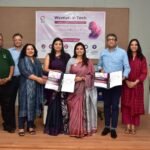
Ahmedabad, May 30, 2026: An exhibition on the life and
legacy of Shri Rasiklal U. Parikh was inaugurated at the Ahmedabad Management
Association on Friday. Titled, ‘A Visionary Statesman: The Public Life
of Rasiklal U. Parikh’, the exhibition revisits the journey of the
statesman who played a key role in shaping governance in post-independence
Saurashtra and Gujarat through archival material, historical accounts and
narratives from his public life.
Curated as a research-led public history
initiative, the project is developed by Raj Patel, an intern from the Institute
of Design, Nirma University, as part of his graduation project, with support
from members of the Parikh family and archival researchers. The two-day
exhibition, inaugurated on Parikh’s 116th birth anniversary, has brought
together academics, students, civic leaders, historians and citizens interested
in Gujarat’s political and institutional history.
The project seeks to revisit and document
Parikh’s contribution, whose work in state-building, land reforms and
governance has often remained underrepresented in mainstream historical
memory.
Born on May 29, 1910, in Limbdi, Parikh was a
freedom fighter, administrator and political leader who played a significant
role in the formation and governance of Saurashtra and later Gujarat. He served
as the Home Minister and later Chief Minister of Saurashtra State, and went on
to hold key portfolios including revenue, land, home and industry in the Bombay
and Gujarat governments. A member of the Constituent Assembly of India, Parikh
also participated in the freedom movement and was imprisoned during the Salt
Satyagraha and the Quit India Movement. He was widely recognised for his role
in implementing land reforms in Saurashtra and remained deeply associated with
education and public institutions throughout his life.
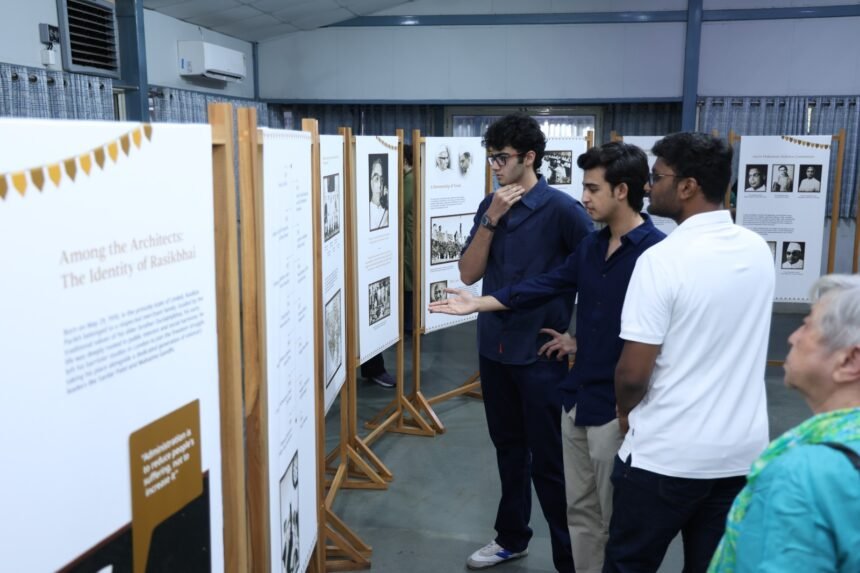
Spread across five thematic sections, the
exhibition traces Parikh’s journey from the freedom movement to the challenges
of governance in post-independence India. It explores his role in the
integration of princely states, the Junagadh annexation, formation of the Aarzi
Hukumat, implementation of the Saurashtra Land Reform Act, and the
administrative complexities of building new institutions in a newly independent
nation. The exhibition also reflects on his intellectual life, political
convictions, personal struggles and public legacy.
Moving away from a conventional commemorative
format, the exhibition presents a research-led and reading-oriented narrative
experience through archival material, interpretive panels and historical
accounts. Visitors are invited to engage with the realities of governance,
institution-building and public service during the formative years of
Saurashtra and Gujarat.
Ms Gauri Wagenaar, Parikh’s granddaughter,
said, “The exhibition emerged from a long-standing desire to reclaim and
preserve an important yet increasingly overlooked chapter of Gujarat’s
political history. The initiative is envisioned not merely as a memorial
project, but as a travelling public archive that would continue to engage
audiences across Gujarat over the coming months.”
Several invited speakers and guests remained
present at the inaugural ceremony on Friday at AMA, who shared personal
recollections and reflections on Parikh’s public life, work ethic and
contribution to governance.